An End to Hallway Medicine in ontario
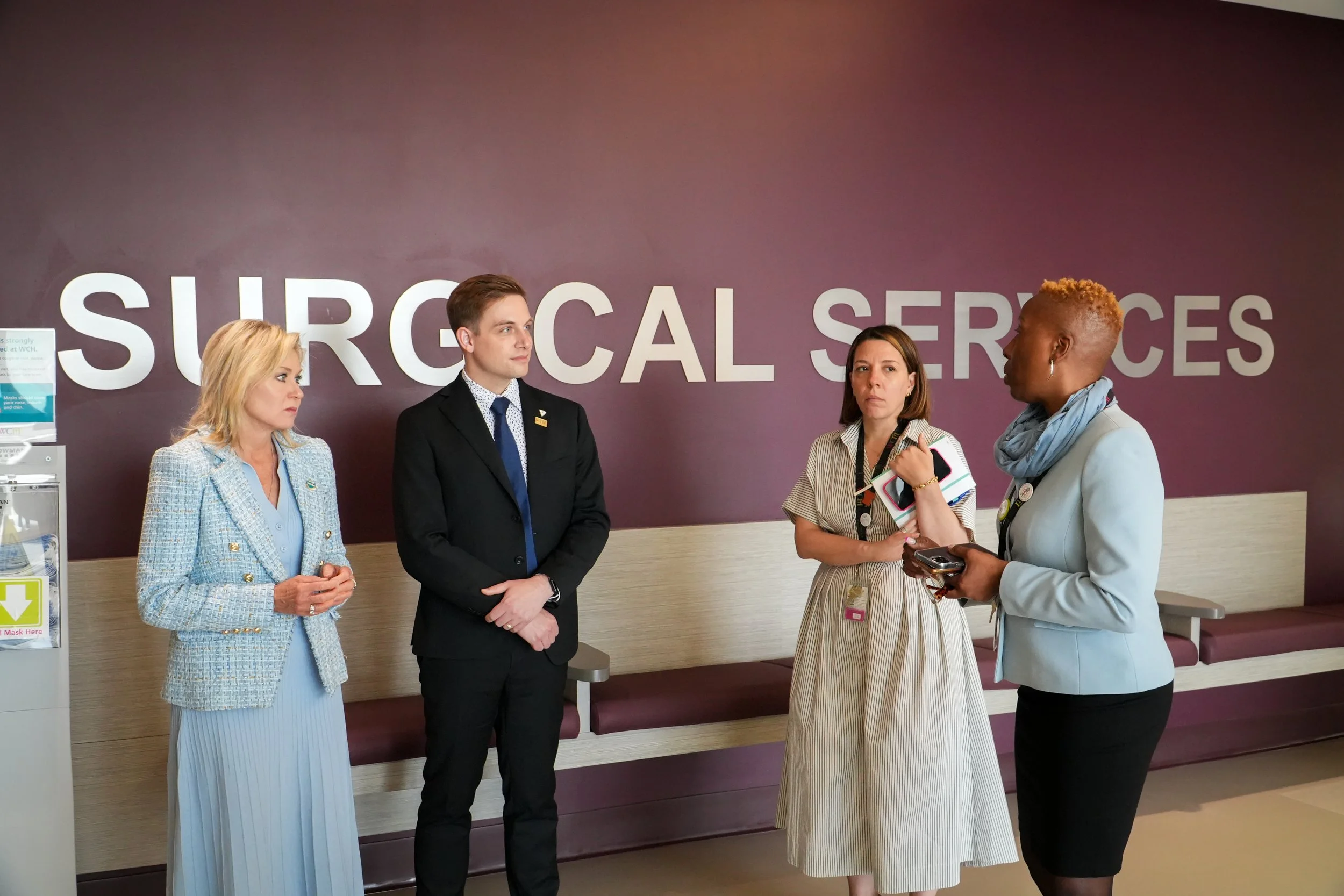
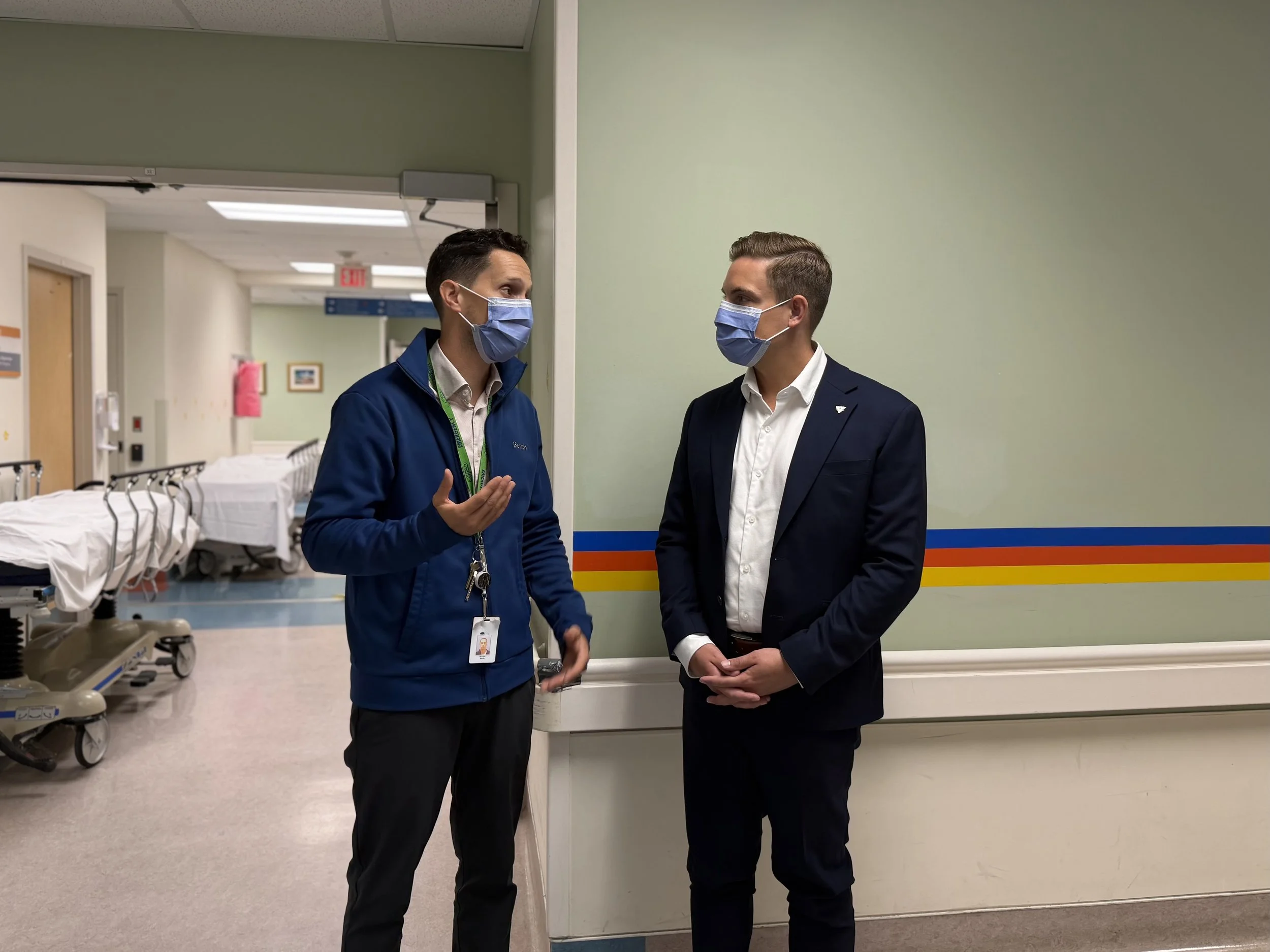
I spent several years as a registered nurse before I ran for office, and it was watching Ontario's hospitals deteriorate under this government that pushed me into public service. I've cared for patients in hallways, in storage areas, in any space a stretcher would fit. I've watched emergency waits stretch past the point of safety, and nurses burn out and leave the profession they love. Hallway medicine is not a scheduling problem; it is the symptom of a system that stopped building and keeping the workforce it needs.
Where Tyler Stands
Rebuild the workforce, starting with nurses
Ontario cannot hire its way out of a problem it keeps recreating. In 2022, nearly 69% of nurses said they were considering leaving the professions and more than 75% reported burnout tied to workplace stress and short staffing. Evey experienced nurse who walks away takes years of skill with them and leaves a vacancy that costs far more to backfill than it would have to cost to prevent. As a result of losing talent, hospitals turn to private nursing agencies. The agency bills the public system a premium for a temporary worker with no long-term stake in the unit.
Ontario should instead establish a dedicated provincial fund to support regional internal float pools. These pools would consist of permanently employed nurses who would be deployed across hospitals within a region to respond to temporary staffing shortages, seasonal demand, or unexpected surges in patient volumes. Unlike agency staff, internal float nurses remain part of the public healthcare system, are familiar with hospital policies and clinical workflows, and can integrate more quickly into care teams. This improves continuity of care while reducing administrative disruptions associated with temporary staffing.
The warning about the growing doctor shortage is directly echoed by the Ontario College of Family Physicians, which released forecasts projecting that the crisis will worsen significantly, leaving 1 in 4 Ontarians—or roughly 4.4 million people—without a family doctor by 2026. (Source: More Than Four Million Ontarians Will Be Without a Family Doctor by 2026 - OCFP)
License the professionals already here
Roughly 3,500 internationally trained physicians live in Ontario and Quebec, the vast majority unable to practice, while more than 2.5 million Ontarians have no family doctor. These are qualified professionals who are already here, already residents, and are being kept on the sidelines by process and unnecessary red tape. Ontario does not need to invest a new pathway – it needs to grow the one it has.
Practice Ready Ontario assesses experienced internationally trained family physicians through a 12-week supervised clinical field assessment instead of requiring them to repeat up to two years of residency and places them in high-need communities under a three-year return of service agreement. However, the scale of the model falls short in terms of numbers, with a target of 50 candidates annually, and the placement of 73 physicians total in 2025. Ontario should expand Practice Ready Ontario to several hundred physicians annually, with multi-year funding so that program can plan and recruit at that scale.
In the capital region alone, a City of Ottawa Primary Care Strategy report found that at least 165,362 residents were without a provider as of 2022, with the local primary care sector estimating Ottawa needs 270 new primary care providers immediately just to meet current demand. (Source: City of Ottawa - Primary Care Provider Recruitment and Retention Strategy)
Reinstate the Unconventional Spaces Measure
In 2024-25, the government retired the "unconventional spaces" measure from Ontario Health's public reporting, one of the clearest public windows into hospital overcrowding. Removing the metric did not reduce hallway medicine. It reduced the public's ability to see it. The measure was dropped under an accountability agreement between Ontario Health and the Ministry of Health, a document the Ministry negotiates with the agency it oversees and revises every few years. No vote was held. No patient was asked. A government agreed with its own agency to stop publishing an inconvenient number about its own performance, and that was enough.
Reinstating the measure would cost the province almost nothing because the counting has not stopped. Hospitals across the province still track these figures internally. The information exists; it is however no longer shared with the people it concerns. Public reporting changes behaviour; when performance is visible hospital by hospital, problems get attention and resources instead of being averaged away in a provincial total. That is why reporting should be monthly and hospital-level. A yearly provincial figure tells a patient nothing about the hospital they are walking into, and it arrives far too late to inform clinical planning or public debate. A family deciding where to take a sick parent, a nurse manager planning staffing, and a community fighting for its emergency department all need current, local numbers.
Regional data supports this strain, showing that multiple Ottawa hospitals operate well above safe bed-occupancy thresholds (which should not exceed 85%); the Ottawa Hospital recently reached 99% occupancy, while Nepean's Queensway Carleton Hospital operated at an 87% occupancy rate, resulting in a cumulative need for 250 additional beds across the city. (Source: Stretched to the Limit: Hospital Union Rally at Queensway Carleton - Business Wire)
A promise made, then quietly abandoned
In 2019, Premier Doug Ford promised Ontarians that hallway health care would be gone within 12 months. Within days, his own Health Minister admitted that timeline was not achievable. What followed made things worse, not better. That same year, the government passed Bill 124, capping annual pay increases at 1% for many public-sector workers, including registered nurses and personal support workers. Health organizations and frontline unions warned it would cripple the province's ability to recruit and keep the very workers hospitals were desperate for. Then, as the pressure mounted, the government quietly retired the “unconventional spaces” measure from Ontario Health's public reporting in 2024–25, removing one of the clearest public windows into hospital overcrowding. You cannot fix a problem you have stopped measuring.
The crisis has only deepened
Behind the reassurances, the numbers moved the wrong way. The average number of patients receiving care each day in hallways and other non-clinical spaces climbed from 826 in 2018 to roughly 1,572 in 2025, a 90% increase. Emergency departments are overwhelmed with 1 in 10 admitted patients now waiting more than 50 hours for a bed. For many, the wait becomes unbearable, and in 2025, nearly 300,000 Ontarians left an emergency department without ever being treated. That carries real danger: patients who leave before being seen face a 46% higher risk of death within seven days, and a 24% higher risk within 30. These are not numbers on a dashboard. They are people who came for help and could not get it in time.
Locally, CUPE's Ontario Council of Hospital Unions (OCHU-CUPE) held a rally directly outside Nepean's Queensway Carleton Hospital in early 2025 to protest this exact issue, noting that provincial stretcher numbers had actually peaked closer to 1,860. (Source: Stretched to the Limit: Hospital Union Rally at Queensway Carleton - Business Wire)
An Institute for Clinical Evaluative Sciences (ICES) study corroborates the severe danger of this trend, confirming that patients who leave the emergency department without being seen face a 14% higher risk of death or hospitalization within a week, driven largely by excessive wait times. (Source: Patients who leave the emergency department without being seen face higher risk of death, hospitalization - ICES)
Locally, wait times to even see a doctor for a first assessment average around 3.4 hours at the Queensway Carleton Hospital, while OCHU-CUPE union data indicates that the average wait for ER patients to be formally admitted at the Ottawa General can stretch up to 22 hours. (Sources: Three Ottawa hospitals rank in top 10 in Ontario for longest wait times - CityNews; Stretched to the Limit - Business Wire)
Starved of the funding to fix it
None of this is an accident. Ontario ranks last among the provinces in per-capita hospital spending, and among the lowest in total health spending in the country. Years of underinvestment have left hospitals unable to recruit staff, modernize aging buildings, or keep up with demand. In 2024–25, 55% of Ontario hospitals ran a deficit, a figure projected to climb to 70%. The Financial Accountability Office calculated that simply maintaining current hospital services would require an additional $6.4 billion by 2026–27. The government's 2026 Budget committed just $3 billion, a $3.4 billion shortfall.
This financial strain is evident across Ottawa, where hospitals faced significant shortfalls in the first half of 2024-25, including a $2.1 million deficit at the Queensway Carleton Hospital and a $49 million shortfall at the Ottawa Hospital. (Source; Stretched to the Limit - Business Wire)