In Ontario’s 2026 Budget, Let’s Focus on Home Care
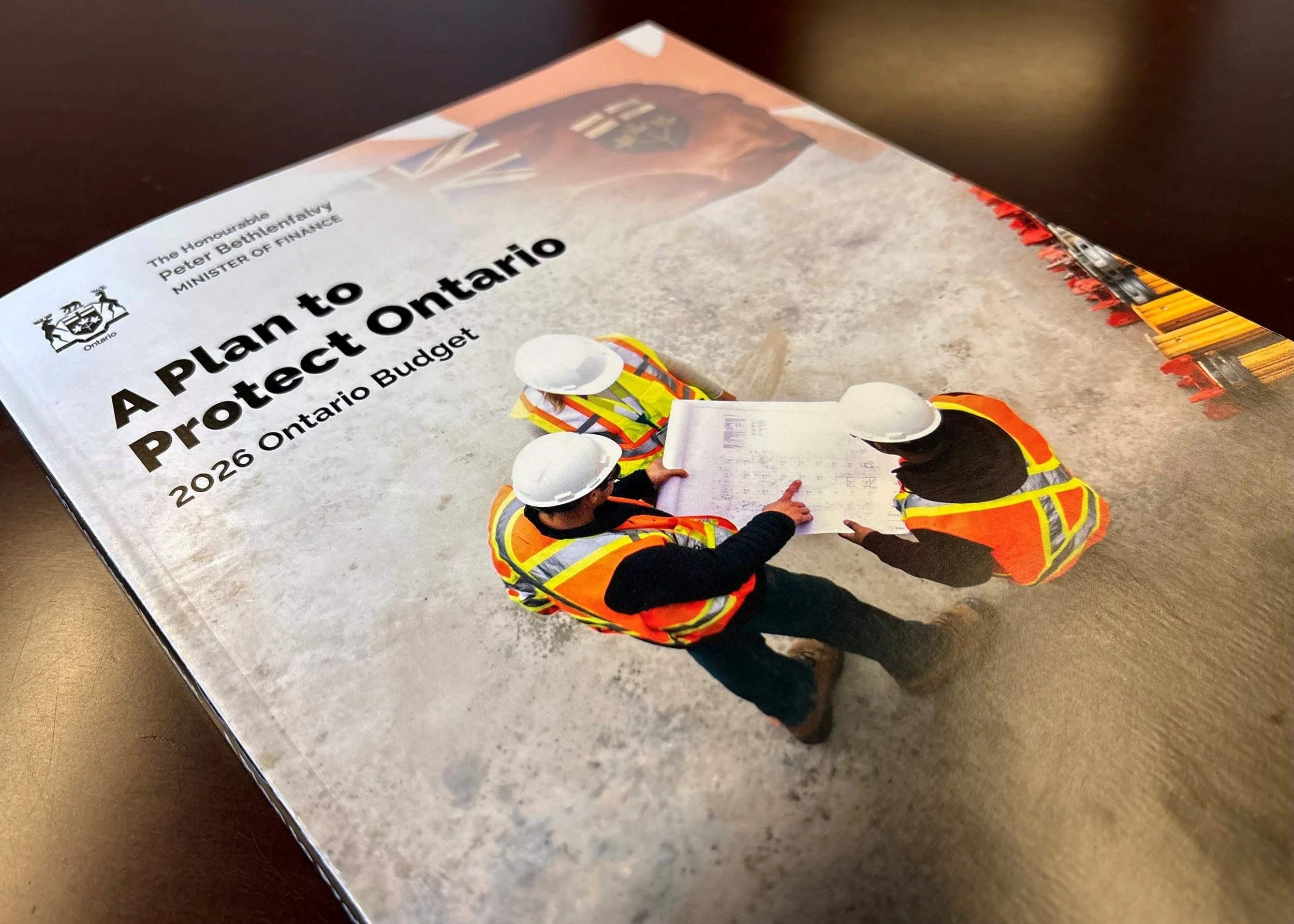
Photo of the cover of the 2026 Ontario Budget, titled A Plan to Protect Ontario, presented by the Minister of Finance Peter Bethlenfalvy on March 26, 2026.
Column published in the January 29, 2026 edition of Your Barrhaven Independent — Community Voice.
By: Tyler Watt, MPP
Ontario’s budget is often discussed in terms of billions of dollars and line items, but for many families, it’s felt in quieter and more personal ways: a loved one waiting too long for home care, a caregiver stretched beyond exhaustion, or a senior stuck in a hospital bed because there’s nowhere appropriate for them to go next. As the government shapes its next budget, these realities need to be guiding the conversation.
Over the next few months, the government will shape its 2026 budget. On January 14, the Standing Committee on Finance and Economic Affairs listened to public consultations from Ottawa-based organizations on the front lines: home care, community supports, hospitals, and senior care providers. These organizations didn’t come with abstract theories or unreasonable requests—they came with lived experiences, statistics, and clear warnings about what happens when our care system is treated as an afterthought. While these groups all highlighted the individual needs of their respective organizations, every presentation shared the same theme: patient needs are more complex than ever, and funding models haven’t kept pace.
Preventative health care works best as a continuum. Assisted living and community supports, followed by homecare, and then long-term care when greater support is needed. This isn’t ideology; it’s common sense. The earlier people receive help, the better the outcomes and the lower the overall cost to the system.
Home care is a prime example. Properly funded home care keeps patients out of emergency rooms, shortens hospital stays, and reduces the demand for long-term care placements. The lack of funding in home care leads to hospitals being used as holding centres and unequipped families acting as full-time care providers to fill gaps they were never meant to manage alone.
Assisted living and community-based supports are just as critical. Services like meals, transportation, wellness checks, and supportive housing prevent crises every day. These services encourage independent living and stabilize people before situations escalate into medical and mental health emergencies. These programs are the most cost-effective and successful tools the province has for preventative health care, so why are they so drastically underfunded?
Long-term care also requires meaningful investment. Residents have more complex care needs than in the past and operating costs have increased. Proper funding that accounts for this is essential to ensuring safe staffing levels, providing specialized care, and preserving dignity for those who rely on around-the-clock support.
Too often, calls for investment in preventative care are labelled as ambitious or unreasonable. They aren’t. They’re necessary. The alternative—hallway medicine, caregiver burnout, and the continued loss of community supports—is far more expensive and damaging.
This isn’t about ideology; this is about planning for the Ontario we already have and providing funding support for the care that we need and deserve. Pretending otherwise doesn’t save money—it just shifts the costs and burden onto families, caregivers, and an already-overburdened and underfunded hospital system. Funding long-term care and home health care properly isn’t just compassionate, it’s responsible, and it’s long overdue.
